What to browse, and what each category costs you in attention
Browsing by category is the fastest way in, and every category has its own way of going wrong. Sneakers go wrong on sizing. Down jackets go wrong on freight. Watches go wrong at the route card. Knowing which one you are walking into is most of the value of a list like this.
Every link below has been tested and goes to a live category page in the product wall. Ordering happens on the agent site afterwards, not there.
Once a category has given you a candidate, the next two steps are choosing between the listings behind it and handing the link over. If the whole idea of a wall of cards is new, start with what a card is.
The three bars on each tile are our own marker for how easily that category is picked wrong at the finding and option stage. They are a reading aid, not a rating of quality or of any seller.
Sixteen shelves, and the one thing each card leaves out
Every card below is a pointer: a photograph, a name, the marketplace it sits on, and a link. That is enough to find a thing and not enough to buy it blind. Under each shelf is the detail that photograph cannot carry, which is the question worth asking the seller before you hand the link over. Womenswear is the one card that runs a search rather than opening a shelf, and it says so.
 SneakersWhich size chart the number belongs to. EU, US and CN all appear, and the card shows only one of them.Category
 Jackets and coatsWhat the filling is and how much of it there is. Two coats that photograph the same can bill very differently by volume.Category
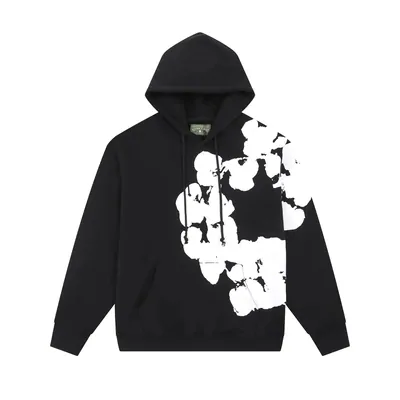 HoodiesThe fabric weight. A 280g hoodie and a 480g one look identical here and wear nothing alike.Category
 T-shirtsWhether the cut is boxy or fitted. Printed graphics photograph flat, so the shoulder line is the thing you cannot see.Category
 JeansWhether the inseam follows your height or the waist number. The card carries one length and does not say which.Category
 Track pantsWhether the waist is elastic or a drawcord, and whether the cuff is closed. Both decide the fit more than the size does.Category
 WomenswearThat this one is a search, not a shelf. The catalogue files by category rather than by who wears it, so this card runs a query instead.Search results
 JerseysPlayer issue or fan issue. Same badge, same photograph, different fabric and a different price.Category
 BagsHow big it actually is. Bags are shot without anything beside them for scale, and the measurements live on the seller page.Category
 HatsWhether the band adjusts. A fitted cap and an adjustable one are the same picture from the front.Category
 BeltsThe strap length. Belt sizing is not waist sizing, and the card shows the buckle rather than the number.Category
 EyewearWhether the lenses are plain or prescription-ready, and what they are made of. Neither reads off a photograph.Category
 PerfumeThe volume. A 30ml bottle and a 100ml one are the same photograph, and this is also the category most often refused by air freight.Category
 JewelleryWhat is under the plating and how thick it is. Gold tone photographs the same at every thickness.Category
 WatchesQuartz or mechanical, and whether there is a battery in it. The second one decides which routes will carry it.Category
 ElectronicsThe plug standard, and what kind of battery is inside. Both are freight questions before they are shopping questions.Category
Shoes
The busiest corner of the Niuniubox Spreadsheet, and the one where a question asked before payment saves the most money.
Sneakers
Sizing is the whole game. Many listings give bands by body weight rather than foot length, so a measurement request in the message box is usually worth sending.
Browse sneakersCategoryShoes
Photographs flatter shoes more than any other category. Ask for a check photo of the sole and the stitching before it ships.
Browse shoesCategoryCasual shoes
Often sold in half sizes that do not map onto a European scale. Compare the insole length in centimetres, not the size number.
Browse casual shoesCategoryLeather shoes
Material wording is loose in translation. If it matters, ask what the upper and the lining actually are.
Browse leather shoesCategorySandals
Light and awkwardly shaped, so a pair can cost more to ship than it did to buy. Estimate the freight first.
Browse sandalsCategorySlippers
Bulky for the weight, which is the classic volumetric weight trap.
Browse slippersOne habit for every category on this page
Open the seller listing and read the option list before you decide anything. The card tells you what the thing is. The listing tells you what you will actually receive: which colours exist, what sizes the seller published, whether anybody has bought it, and what the photographs look like at full size.
The second habit is to think about the parcel while you are still choosing the item. Freight is charged on the larger of the real weight and the size based figure, so the difference between a hoodie and a down jacket shows up on the route card, not on the product page.
Tops and knitwear
Sizing charts here are published in centimetres when they are published at all. Reading them beats guessing from a letter.
Hoodies
Chinese sizing runs smaller through the shoulders. The seller chart is worth reading in centimetres rather than in letters.
Browse hoodiesCategorySweaters
Fibre content is the thing translation mangles most. Ask if it matters to you.
Browse sweatersCategoryT-shirts
Cheap enough that people order several, which is exactly how a parcel turns into a customs question.
Browse t-shirtsCategoryShirts
Collar and sleeve measurements are rarely published. This is a message box category.
Browse shirtsCategoryPolo shirts
Frequently sold in sets. Check whether the price is for one or for a pack.
Browse polo shirtsWhy outerwear is its own problem
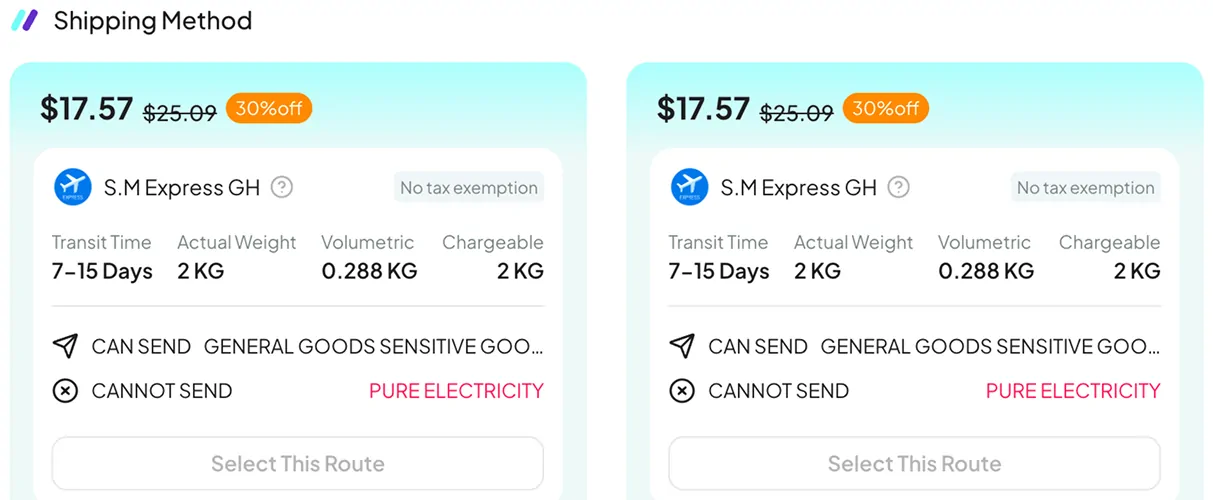
Outerwear is where the two weights on a route card diverge hardest. A down jacket weighs almost nothing and takes up an enormous amount of space, so the size based figure wins and you pay against that.
There are two levers. Ask about compression when the order goes in, since packing is a request you can make at that stage. And combine sensibly: one parcel with a jacket and three light items often costs less than two parcels.
Outerwear and trousers
The freight category. Everything here is worth putting through the estimator before you commit.
Jackets
Heavy and bulky at once, so both weights on the route card end up high.
Browse jacketsCategoryDown jackets
The single worst category for volumetric weight. Compression in packing helps and is worth asking for.
Browse down jacketsCategoryWindbreakers
Light, so the volumetric figure will almost certainly be the one you pay against.
Browse windbreakersCategoryJeans
Waist measurements in the chart are usually flat measurements doubled. Read the chart, not the label size.
Browse jeansCategorySweatpants
Inseam length is the measurement nobody publishes and everybody needs.
Browse sweatpantsCategoryShorts
Cheap, light, and the easiest thing to add to an existing parcel while it waits.
Browse shortsAccessories, and the one that gets parcels stopped
Small items are the easiest things to add to a parcel that is already waiting, which makes them the natural second purchase. One exception: anything with a battery in it.
Route cards carry an explicit line about what the lane can and cannot take, and bare batteries are the standard refusal. A watch is usually fine, a loose battery pack usually is not, and the only reliable way to know is to read the card for the route you are actually using.
Bags and accessories
Light, easy to combine, and home to the single most common reason a route refuses a parcel.
Bags
Hardware and lining are what the photographs hide. A close check photo is the answer.
Browse bagsCategoryBackpacks
Volume is the point of the product and the reason the freight is high. Estimate before you order.
Browse backpacksCategoryWallets
Small, light and the ideal thing to combine with something else rather than ship alone.
Browse walletsCategoryWatches
Batteries are the reason routes refuse parcels. Read the cannot send line before you buy.
Browse watchesCategoryEyewear
Fragile and case-shaped, so packaging is a real decision here rather than a preference.
Browse eyewearCategoryJewelry
Plating wording is the loosest translation on the site. Ask what the base metal is.
Browse jewelryCategoryHats
Crushed in transit unless the packing is specified. This is what reinforced packaging is for.
Browse hatsHow to choose between two cards in the same category
When two cards look interchangeable, these four checks separate them, in this order.
| Check | Where to look | What a bad answer looks like |
|---|---|---|
| Is the link alive | Open it before anything else | The seller page does not load, or loads onto a different product. |
| Has anyone bought it | The sales count and purchase record on the seller page | A listing with no history at all. Not fatal, but it means nobody has tested it for you. |
| Did the seller publish measurements | The size area of the listing | Bands by body weight only, or no chart at all. That becomes a message box question. |
| What will it weigh and measure | The freight estimator, with a rough guess | A freight figure larger than the item. Common with outerwear and shoes, and better known now. |
When the category page has nothing you want
Two moves. Search the catalogue directly for the item name rather than browsing, since it is bigger than any one category page. Or take a listing you already have, from anywhere, and hand that link to the agent instead. The agent does not care where the link came from.
What not to do is order the nearest thing on the wall because it is there. The freight on a wrong item costs the same as the freight on a right one.